
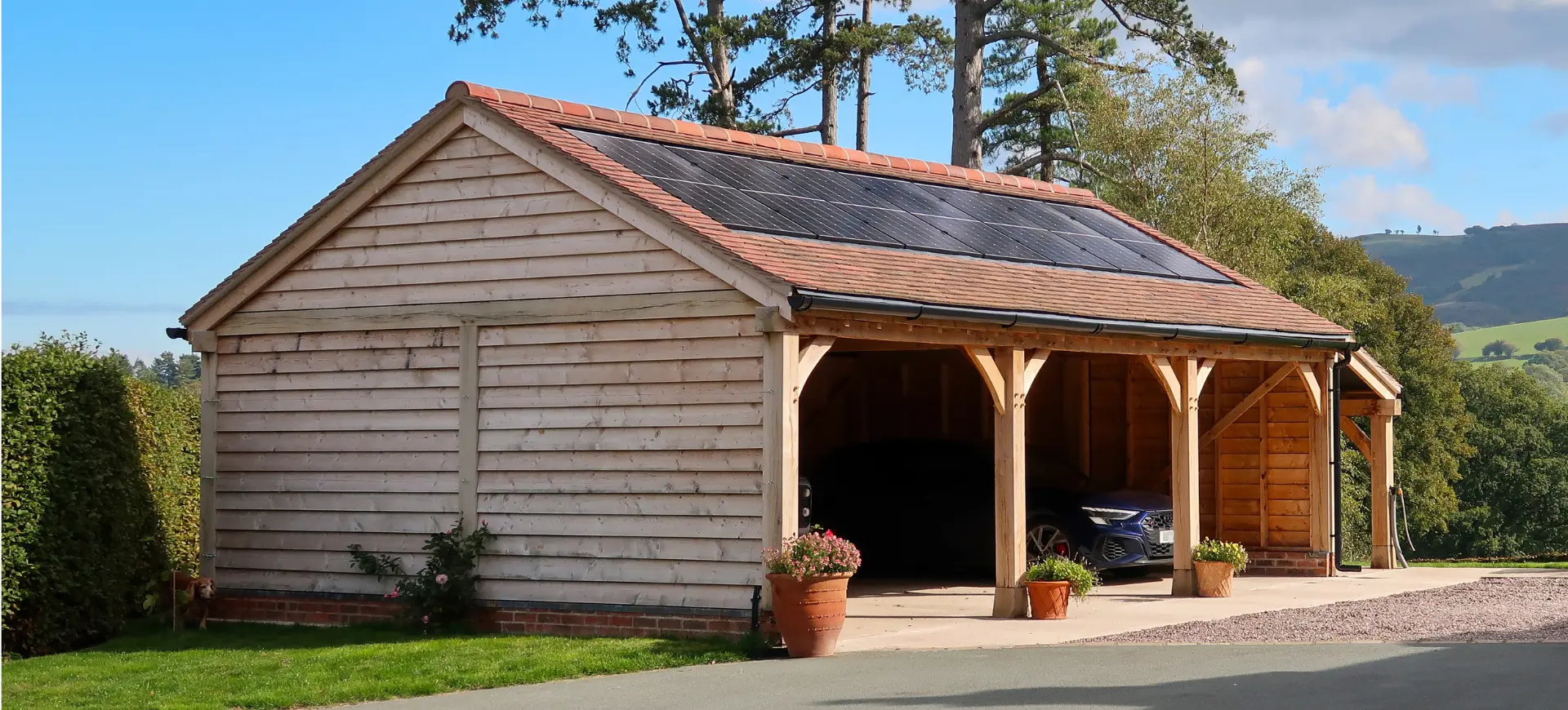
Oak framed garages have become one of the most sought-after additions for UK homes - combining practical vehicle storage with timeless British craftsmanship.
Whether you’re planning a simple oak car port, a fully enclosed garage, or a larger garage with room above, understanding the building process is an important first step.
At Radnor Oak, we’ve spent decades designing and handcrafting premium oak framed garage kits from our Mid-Wales workshop. While every project differs slightly, the overall process remains broadly the same - from planning and groundwork through to erecting the frame and completing the roof.
This guide explains how to build an oak framed garage step-by-step, while highlighting the areas where choosing a high-quality pre-jointed oak kit can save considerable time, stress, and cost in the long run.
Step 1: Planning Permission & Design
Before any groundwork begins, the first stage is deciding exactly what type of oak garage you want to build.
This includes:
- Number of bays
- Open or enclosed design
- Roof style and height
- Door and window placement
- Storage requirements
- Future use of the building
For many UK homeowners, planning permission is the first concern.
In some cases, an oak framed garage may fall under Permitted Development Rights - particularly our range of single storey buildings designed below 4 metres in overall height with a dual-pitched roof. This is one reason why buildings such as our Byton Low Ridge range are so popular. View the full range of oak framed garages under 4m here.
That said, planning rules vary depending on:
- Property type
- Conservation areas
- Listed buildings
- Overall footprint
- Intended use
It’s always worth confirming with your local planning authority before proceeding.
One of the biggest advantages of working with an experienced oak frame supplier is receiving guidance early in the process. A well-designed oak garage kit should already account for practical considerations such as roof pitch, structural loading, bay spacing, and overall proportions.
.jpg)
Step 2: Preparing The Foundations
Substantial foundations are critical for any oak framed building.
Oak is an incredibly durable structural material, which means the frame itself is heavy - so it needs to be sat on foundations that can withstand its weight.
The exact foundation specification will depend on:
- Ground conditions
- Garage size
- Drainage
- Whether the building is enclosed
- Future intended use
In most cases, oak framed garages are installed onto:
- Reinforced concrete pads
- Concrete strip foundations
- Concrete raft foundations
Groundworks are typically completed by a local contractor before our oak frame arrives on site, following the comprehensive drawings and specifications provided with our kit packages.
Drainage should also be considered early on - particularly if the garage will eventually include:
- Plumbing
- Utility space
- Workshops
- Habitable areas above
At Radnor Oak, our drawings provide clear guidance for contractors preparing the foundations ahead of installation. Our expert team is also on hand to assist with any questions throughout this stage.
.jpg)
Step 3: Delivering & Organising The Oak Frame Kit
Once foundations are complete, the oak frame kit can be delivered to site.
A premium oak framed garage kit from Radnor Oak will arrive:
- Pre-jointed
- Clearly labelled
- Accompanied by detailed drawings
- Dry-fitted in our workshop, ensuring each component locks together seamlessly
- Ready for assembly
This is where the difference between high-quality oak framing and cheaper alternatives becomes obvious.
Poorly manufactured kits can create significant delays on site, particularly where joints are inaccurate or components require modification during erection. A properly manufactured oak frame should fit together exactly as intended.
At Radnor Oak, every frame is handcrafted using traditional mortice and tenon jointing techniques, with seasoned oak draw pegs securing the structure together. The components are carefully checked by hand before leaving our Mid-Wales workshop to ensure smooth installation on site.
.jpg)
Step 4: Erecting The Oak Frame
With the foundations complete and materials on site, the oak frame itself can now be assembled.
This stage is often much quicker than people expect.
A professionally manufactured oak framed garage kit can usually be erected within a matter of days, depending on size and complexity.
The process generally follows this order:
- Oak posts positioned
- Wall plates installed
- Tie beams connected
- Braces fitted
- Roof trusses raised
- Structural pegs secured
Mechanical lifting equipment is often used for larger frames and roof trusses.
One of the major benefits of traditional oak framing is the inherent structural strength created by mortice and tenon joints. Once assembled, the frame becomes incredibly rigid and durable.
This is also the stage where the craftsmanship becomes most apparent.
Features such as:
- Chunky oak posts
- Traditional knee braces
- Exposed beams
- Handcrafted trusses
all contribute to the unmistakable character oak framed buildings are known for.
For many homeowners, watching the frame go up is the moment the project truly comes to life.
.jpg)
Step 5: Roofing The Garage
Once the oak structure is erected, the roof construction begins.
The roofing stage will usually include:
- Rafters
- Roof decking or battens
- Breathable membranes
- Roof coverings
- Flashings
- Gutters and drainage
The choice of roof covering has a significant impact on the final appearance of the building.
Our choices of roof covering include:
- Cedar shingles
- Natural slate
- Clay tiles
- Composite slate
Each creates a slightly different feel - from traditional countryside character through to a more refined contemporary finish.
At Radnor Oak, our oak garages are designed to work with both traditional and modern roofing materials, allowing customers to tailor the final appearance to suit their property and surroundings.
.jpg)
Futureproofing Your Oak Framed Garage
One of the biggest advantages of an oak framed garage is its long-term flexibility.
What begins as vehicle storage today may later become:
- A workshop
- Home office
- Gym
- Studio
- Guest accommodation
- Hobby room
This is why investing in quality from the outset matters.
A premium quality oak framed garage should not only look beautiful on day one - it should continue serving your property for decades to come.
At Radnor Oak, our oak framed garage kits are handcrafted using only premium materials, with many timbers being rejected if they do not meet our standards. From compact single bay garages through to large garage buildings with full second floors, every structure is crafted with a focus on exceptional long-term quality.
Explore our oak framed garage range or speak with our team for guidance on choosing the right building for your project.